


Who are suitable users of electric foot filers?
Electric foot grinders remove the keratin from the soles of the feet through physical friction and are suitable for most people's daily care. However, the choice should be carefully based on the health of the foot. Specific recommendations for population and use are as follows:
I. Core target audience
a person who stands or walks for a long time
For professionals such as teachers, nurses, salespeople and couriers, chronic foot stress tends to create thick calluses. Electric foot grinder can quickly soften and remove aged keratin, relieving foot fatigue.
Tip: Choose a multi-speed adjustable model. Do this 1-2 times a week for no more than 3 minutes each time to avoid grinding too much.
Sports enthusiasts
Activities such as running, mountain climbing and ball games can easily lead to calluses on the feet due to friction. Electric foot grinders regularly remove dead skin and prevent corn or plantar fasciitis.
Tip: Prioritize waterproof design (if fully washable). Use after cleaning your feet during exercise and with a foot massage to promote recovery.
People with thick or dry keratin on their feet
For those with cracked heels and a noticeable build-up of keratin, use an electric sole scrub or pedicure mask in combination to enhance the exfoliation effect.
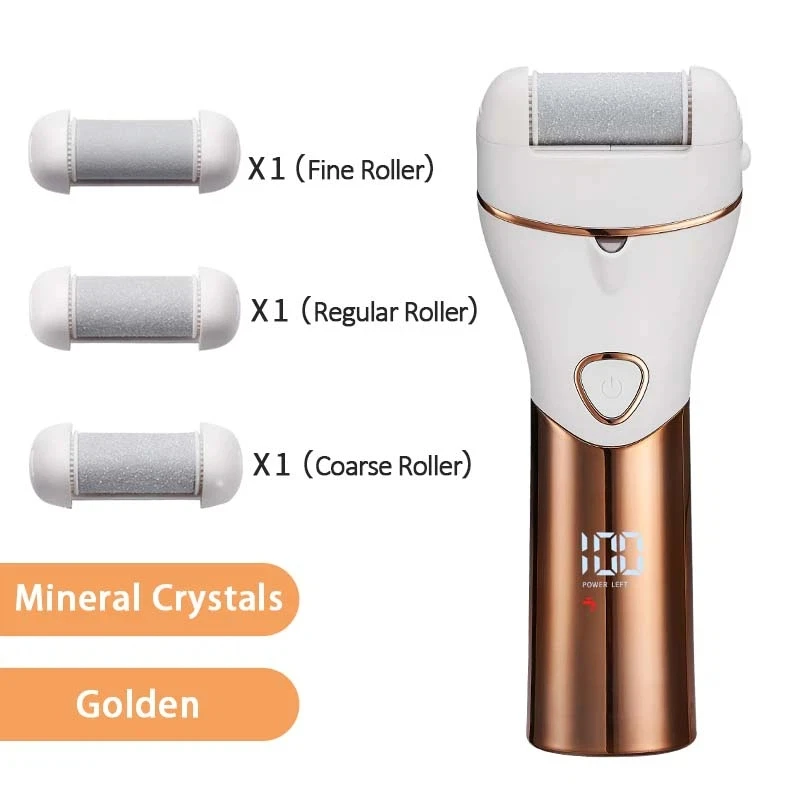
Tip: Soak your feet for 10 minutes before using to soften the stratum corneum. Choose a coarse grinder to effectively remove thick calluses, then polish with a fine grinding head.
Those who seek convenient care
Scene: For those who don't want to go to foot salon often or stack their feet with their hands, an electric foot grinder can independently control strength and frequency, saving time and cost.
Tip: Choose models that are simple to operate (such as a one-click start) or lightweight in design (such as a compact body) for home use or travel.
II. People who need to use it carefully
A person with a cut or inflammation in the foot
Risk: Friction can exacerbate wound infection or cause inflammation to spread, such as athlete's foot, eczema, open wounds, etc.
Advice: Use only after the wound has completely healed, or consult a doctor.
Diabetic patients
Risk: Reduced sensitivity to nerves in the feet, which can unknowingly cause skin damage due to improper handling, increasing the risk of infection.
Tip: Prioritize low gear, use them with the assistance of family and avoid operating them yourself.
People with sensitive or sensitive skin
Risk: Heat from certain abrasive head materials (such as metal) or friction can irritate sensitive skin, causing redness or itching.
Tip: Test the texture of the inner arm grinder before using. Choose natural silica or soft abrasives and control the usage time.
Elderly or children
Hazards: Reduced skin elasticity in more elderly people and delicate skin in children. Both are vulnerable to mishandling.
Advice: Older people should use it under the supervision of their families. It is not recommended for children, and it is not recommended to choose a low-power model specifically designed for children (confirm the product description).
Iii. Applicability in special circumstances
Pregnant women: If there is no trauma or inflammation in the foot, use low-speed molars for a short period of time, but avoid prolonged molars. Suspension is recommended if the foot is swollen or sensitive.
Foot deformities (such as flat feet or high arches): The Angle of use should be adjusted to the shape of the foot to avoid excessive local friction.


